Discover the highlights of Bhutan on this eight-day journey through the country’s sacred valleys, historic monasteries, and breathtaking Himalayan landscapes. From the cultural landmarks of Thimphu and the remote beauty of Khotokha and Gangtey to the iconic Tiger’s Nest Monastery in Paro, this itinerary combines scenic hikes, authentic cultural encounters, traditional festivals, and spiritual experiences for a meaningful introduction to the Kingdom of the Thunder Dragon.
Day 1: Arrive in Paro.
Drive to Thimphu Distance: Paro/Thimphu – 53kms/ 32 miles
Drive Time: approx. 1.5 hours
Altitude: 2,350 m / 7,709 ft.
Upon your arrival at Paro International Airport, our representative will warmly welcome you and escort you to your hotel in Thimphu, the vibrant capital city of Bhutan. Your journey begins with a picturesque drive along the winding road that follows the beautiful Paro River.
The drive takes you through the winding road with lots of beautiful hamlets.
En-route, visit Simtokha Dzong, officially known as ‘Sangkak Zabdhon Phodrang’ or the Palace of the Profound Meaning of Secret Mantras. Built in 1629 by Shabdrung Ngawang Namgyal, it is often said to be the first Dzong built in Bhutan and is a gateway to Thimphu Valley.
If time permits, visit Tashichho Dzong, or else you can visit the following day.
Tashichho Dzong located on the northern edge of the city of Thimphu, on the western bank of the Wang chu. Tashichho Dzong is Bhutan’s most stately and arguably the most impressive building. It has traditionally been the seat of the Drukdesi or ‘Dharma Raja’, the head of Bhutan’s civil government, an office which has been combined with the kingship since the creation of the monarchy in 1907, and summer capital of the country.
Note: Tashichho Dzong is open during weekdays after office hours (5pm onwards) and from 9am to 5pm on weekends.
Overnight at Hotel, Thimphu
Day 2: Drive to Khotokha Valley
Altitude: 2,600 m / 8,500 ft
Distance: approx. 125 kms
Drive time: approx. 4 hours
After breakfast, drive to Khotokha via Dochu la Pass (3,088m/10,130ft). If you have a clear sky, the view of the Himalayan Mountain ranges is spectacular, and you can even see the Gasa Dzong as a white dot on the horizon. Visit the beautiful 108 chortens built on the hill by Her Majesty Ashi Dorji Wangmo for the security and well-being of His Majesty the King of Bhutan.
Hang a prayer flag at the pass: Traditionally, prayer flags are used to promote peace, compassion, strength, and wisdom. The flags do not carry prayers to gods; rather, it is believed that the prayers and mantras will be blown by the wind to spread goodwill and compassion into all-pervading space.
Khotokha is a large glacial valley with very few inhabitants and sacred sites. Most of the settlements are farmers and involved in potato cultivation. It is also a home to sacred monasteries and hermitages. All the settlements are on the valley floor, where most settlements are subsistence farmers and are mostly involved in potato cultivation. The plains are too breathtaking to miss, and the sacred sites of Khotokha drive people from all over Bhutan to visit this magical valley.
After refreshment, embark on a beautiful loop hike involving four of the most sacred monasteries in Khotokha. Start walking for half an hour until you cross a small bridge and climb up towards Jangsa Dzong, often known as the shrine of the Ap Radrap. Offer prayers and continue towards Khotho Rincheling Shedra, which currently houses more than 300 monks.
Overnight at Namo Retreat Khotokha
Our tented camp includes: –
- Cottage tent with a comfortable sleeping bed (portable) & rug
- Toilet tent
- Shower tent
- Experienced crew members
- Blanket pillow and hot water bottle
- Bath towel and face towels
- Flashlight
Day 3: In Khotokha Valley
Today you will have an opportunity to enjoy a lively and vibrant festival celebration. You will witness and participate in a grand ceremony of a full reconstruction of the popular Tshechu dances, a traditional Bhutanese dance. A series of highly stylized masked dance rituals is performed. Attendees adorned in astounding colors gather from around the village. It is the time to join the locals, receive blessings from sacred ceremonies, and interact with the monks.
The untouched beauty of deep pine forests in Khotokha offers possibilities for trekking to sacred sites and remote villages bound by scenic beauty. There are many drupchus/holy water springs and menchus/ healing water, believed to have healing powers. Many caves and self-imprints left by great tantric and Buddhist masters are found in the caves. Explore the valley.
Overnight at Namo Retreat Khotokha
Day 4: Trek to Gogona and drive to Phobjika Valey
Altitude: 3,100 m / 10,170 ft.
Trek distance: approx. 16 kms
Trek duration: approx. 5-6 hours
This hike begins from the beautiful Khotokha valley towards the Phobjikha valley (3,000m), one of the few glacial valleys in Bhutan, which lies in the mountains east of Wangduephodrang. This moderate hike visits the villages of Gogona from Khotokha, passing through meadows and fields, then forests of Juniper, Magnolia and Rhododendrons in full bloom in April and early May.
Gogona is a small village with an outstanding monastery under the care of Gangtey Gompa.
Overnight at Namo Lodges Gogona
Day 5: Explore Gogona Valley
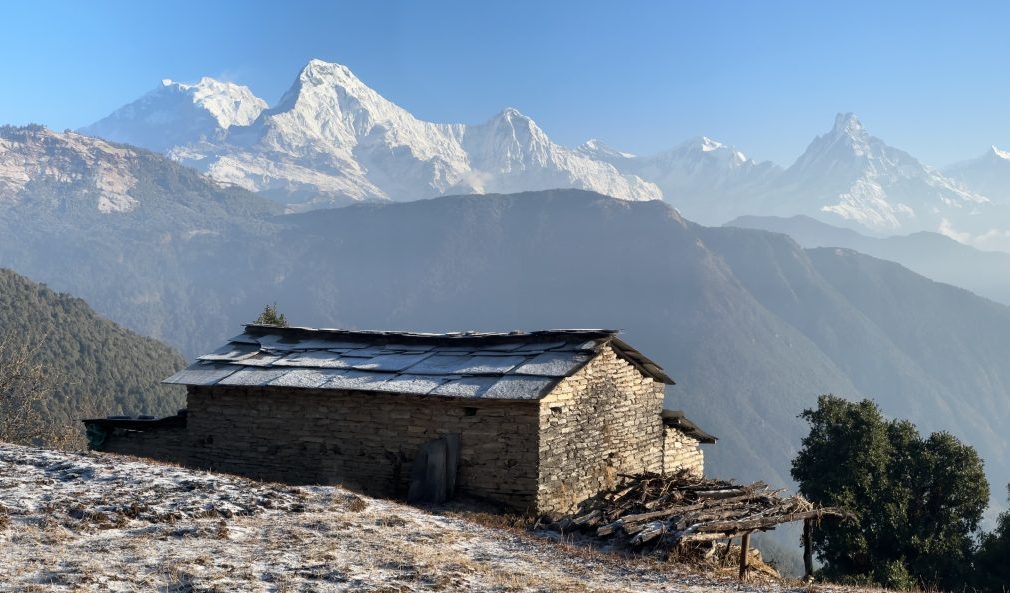
Wake up to the peaceful atmosphere of Gogona, a remote highland village surrounded by rolling meadows, forests, and traditional farmhouses. The day is dedicated to immersing yourself in the rhythm of rural Bhutanese life.
Take a leisurely walk through the village, where you can observe daily farming activities and interact with local families. Visit the historic Gogona Monastery, a spiritual center that has served the community for generations and offers insight into the region’s Buddhist traditions.
The surrounding hills provide excellent opportunities for short hikes, rewarding walkers with panoramic views of the valley and the distant mountains. The pristine environment, fresh mountain air, and unhurried pace make Gogona an ideal place to appreciate Bhutan’s natural beauty and cultural heritage.
Overnight at Namo Lodges Gogona
Day 6: Drive to Phobjika Valley
Drive distance: approx. 2 hours
Altitude: 3,000 m / 9,842 ft
Gangtey / Phobjika is a glacial valley (3,000 m) on the western slopes of the Black Mountains, a designated conservation area bordering the Black Mountain National Park where large flocks of black-necked cranes come in winter. It is one of the most important wildlife preserves in the country and described as “the most beautiful spot in the most beautiful country in the Himalayas.”
Check in at the hotel.
After refreshment, visit Gangtey Gonpa Monastery complex with five temples that surround the main central tower. It is one of the main seats of the religious tradition based on Pema Lingpa’s revelations and one of the two main centers of the Nyingmapa school of Buddhism in Bhutan. In the evening explore the valley while walking down the streets.
Overnight at the hotel
Day 7: Explore Phobjika Valley
Today is dedicated to discovering the beauty and ecological significance of Phobjikha Valley, one of Bhutan’s most scenic glacial valleys and an important conservation area.
Begin with a walk along the renowned Gangtey Nature Trail, which winds through pine forests, open meadows, and traditional villages while offering sweeping views across the valley floor. During the winter months, Phobjikha becomes home to the endangered black-necked cranes that migrate from the Tibetan Plateau, making it one of Bhutan’s most important wildlife habitats.
Visit the Black-Necked Crane Information Centre to learn about the conservation efforts that protect these revered birds and their fragile ecosystem. The remainder of the day can be spent exploring the valley’s peaceful villages, visiting local homes, or simply enjoying the tranquil landscape that has made Phobjikha one of Bhutan’s most beloved destinations.
Overnight at the hotel
Day 8: Drive to Punakha
Altitude: 1,300 m / 4,265 ft.
Distance: 78 kms / 48 miles
Drive time: approx. 3 hours
After breakfast, drive to Punakha.
Upon reaching Punakha, walk through the Metshina Village and take a 20-minute walk through the rice fields to the Divine Madman’s Monastery, Chimi Lhakhang, famously known for its fertility shrine, where one can receive a special fertility blessing.
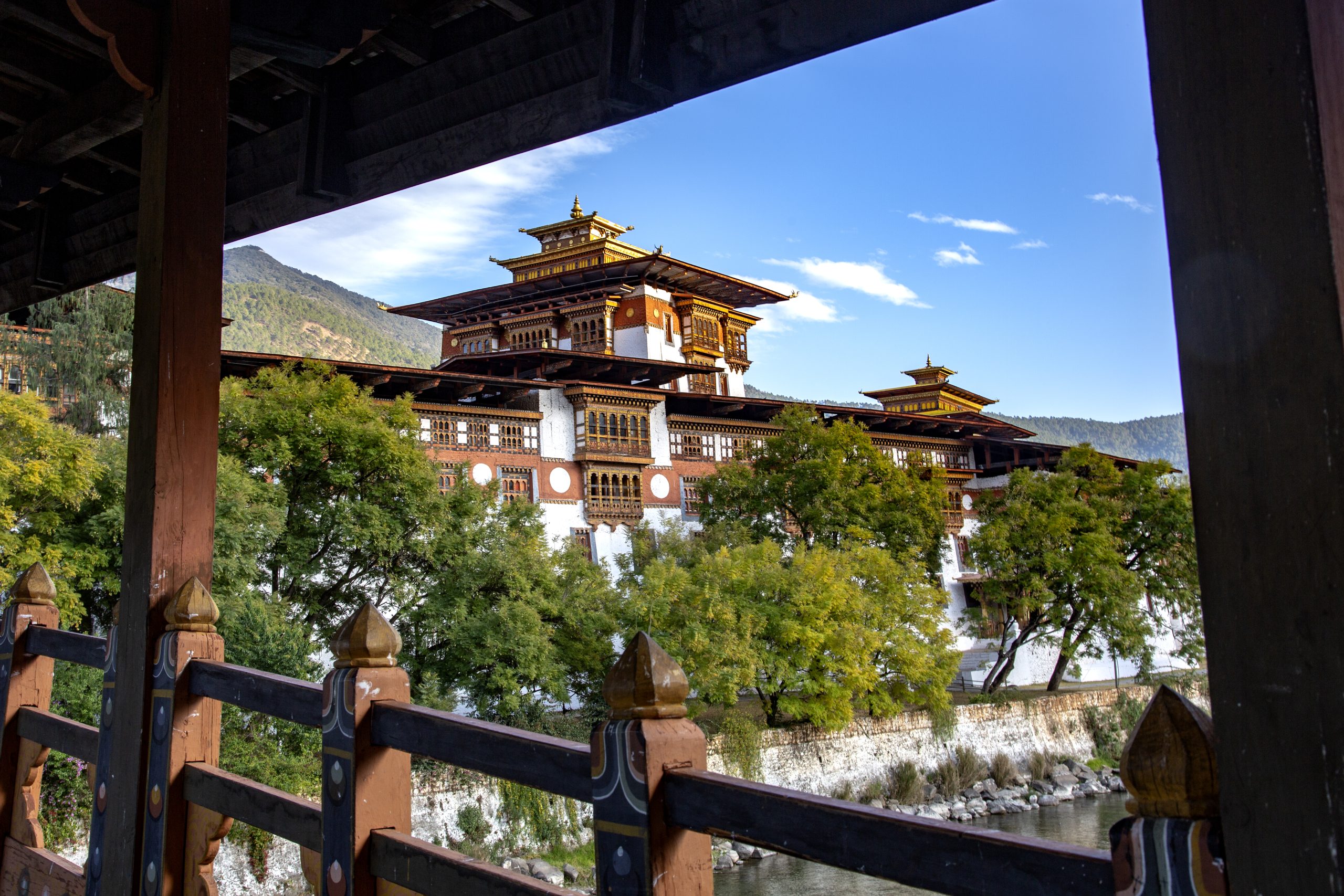
Later visit the Punakha Dzong, located on the island of the Pho – Chu (male) river and the Mochu (female) river. Built in 1637, Punakha Dzong now serves as the administrative center of Punakha district and the central monastic body.
Rest of the day is free on own.
Overnight at the hotel
Day 9: Drive to Paro
Altitude: 2,250 m / 7,382 ft
Distance: 143 kms / 88 miles
Drive time: approx. 4 hours
After breakfast, drive to Paro. Upon arrival in Paro, visit Paro Dzong and National Museum of Bhutan.
Paro Dzong, also known as Ringpung Dzong means ‘Fortress on a heap of jewels’. This impressive dzong is the finest example of Bhutanese architecture and is one of the most popular and well known dzongs in Bhutan. It is the administrative seat of the district of Paro. The dzong was built in the 16th century on the foundation of a monastery built by Guru Rinpoche. In the past, this dzong was used on numerous occasions to defend the Paro Valley from invasions by Tibet.
Visit the National Museum of Bhutan, a unique circular building also known as Ta-dzong which is an ancient watchtower above the Paro Dzong. The National Museum has in its possession over 3,000 works of Bhutanese art, rich holdings of various creative traditions and disciplines that represent a remarkable blend of the past with the present.
Overnight at the hotel
Day 10: In Paro – Hike to Taktsang Monastery
Hike Duration: approx. 4.5 hours (depending on the walking pace)
After breakfast, depart from your hotel for hike to Taktsang Monastery. Perched on the side of a vertical cliff at 3000 m altitude north of Paro, the beautiful Taktsang Monastery also known the ‘Tiger’s Nest’ is the most famous and an unofficial symbol of Bhutan. Legend has it that Guru Rinpoche (Guru Padmasambhava) flew to this location from Khenpajong, Tibet on the back of a tigress and subdued a demon. He then meditated in a cave here for three months and emerged in eight incarnated forms (manifestations) and blessed the place. Guru Padmasambhava is known for introducing Buddhism to Bhutan. Today, Paro Taktsang is the best known of the thirteen caves in which Guru Padmasambhava meditated.
Taktsang Monastery is a pilgrimage site for both tourists and locals. The journey up to the monastery is filled with spiritual bliss. Keeping this spiritual side aside, the journey up to Taktsang Monastery is also a hiker’s delight. An hour hike up to a small wooden teahouse called Cafeteria provides close view of the monastery. A further and a rather challenging hike lead you to the glorious Taktsang Monastery.
In the evening, get ready in the traditional attire of Gho and Kira to enjoy Bhutanese Themed dinner in one of the selected restaurants. It will be customary Bhutanese cuisine served in traditional wooden bowls, plates, and woven baskets. The wooden bowls designed for partaking are as beautiful in presentation.
Overnight at the hotel
Day 11: Departure
Transfer to airport in Paro to board the outbound flight.
This itinerary is provided as a sample and can be customized to suit the client’s interests, preferences, and travel requirements. While all information contained in this itinerary is accurate to the best of our knowledge at the time of publication, changes may occur. Modifications may be necessary to enhance the travel experience or due to circumstances beyond our control, including changes in flight schedules, traffic conditions, weather conditions, local regulations, or government policies.We will make every reasonable effort to inform clients of any significant changes as soon as possible.