Overview:
Nepal offers a serene setting for rest, reflection, and renewal. From the bustling Kathmandu Valley, home to centuries-old temples, palaces, and vibrant local markets, to the peaceful hills of Dhulikhel and surrounding villages, this journey blends cultural discovery with mindful wellness practices. Guests can explore ancient cities, engage in traditional sound healing, enjoy gentle hikes, participate in organic gardening, and rejuvenate with spa therapies, yoga, and meditation.
Day 1: Arrive in Kathmandu
Altitude: 1,400 m / 4,600 ft.
Upon arrival at the Tribhuvan International Airport in Kathmandu, you will be met and assisted by one of our representatives to complete the immigration and visa formalities.
After collecting your baggage, follow the path outside the airport where our local guides will be waiting in the arrivals section. Transfer to the hotel and check-in.
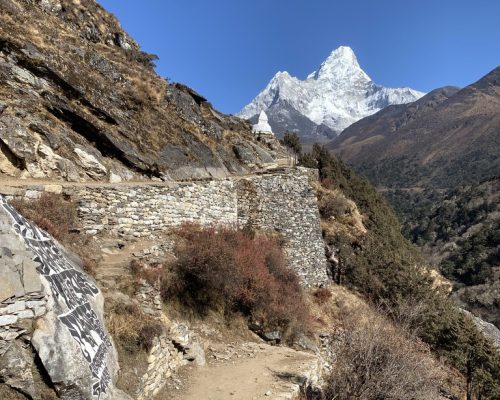
If time permits, visit Boudhanath Stupa, which is one of the most imposing landmarks of Kathmandu and is a center of Tibetan Buddhism. The stupa is built on a massive three level mandala style platform and is 36 meters (118 feet) in height. The base of the stupa is adorned with 108 small images of the Dhyani Amitabha Buddha and inset with prayer wheels. Thousands of pilgrims circle the stupa in a clockwise direction each day spinning the prayer wheels. It is said that each spin of a prayer wheel is the equivalent of reciting the mantra. The stupa’s massive mandala makes it one of the largest spherical stupas in Nepal. The ancient stupa is one of the largest in the world. It is a UNESCO World Heritage Site.
Boudhanath has an extra element as the place gleams with oil lamps while prayer flags soar high fluttering simultaneously. People start their kora (circumambulation) around the stupa in a clockwise direction spinning prayer wheels and the entire place appears magical.
Light butter lamps as an offering of light to the deities. Lighting butter lamps is considered one of the most common means of making merits and one of the most powerful offerings. The light from the flame symbolizes the wisdom of the awakened mind, dispels the darkness of delusion and mental obscuration.
Note: Check-in time at the hotel in Kathmandu: 1400 hours.
Overnight at Traditional Homes Swotha, Patan
Day 2: In Kathmandu
After breakfast, proceed with the tour of Old Kathmandu city. Like any big city, Kathmandu has seen rapid expansion in the last decade, but despite the hustle and bustle so typical of metropolitan cities, its people remain as refreshingly friendly as ever. Retaining its ancient traditions, Kathmandu is blessed by a Living Goddess and is enriched by endless ceremonial processions and events that take to the streets every now and then with throngs of devotees seeking blessings. These religious festivals are steeped in legend and are quite a spectacle with chariot processions and masked dancers often possessed by the spirits of deities.
Take an exciting rickshaw (tricycle) ride honking your way through narrow alleys to the bustling bazaars of Ason. Sit back and relax as you navigate for a slightly different experience of exploring the city like a local
Also, visit Swoyambhunath Stupa, a UNESCO WORLD Heritage Site which rests on a hillock 3 km towards the western edge of Kathmandu. It is one of the most important and the most sacred Buddhist shrines. Legend has it that when Kathmandu Valley was a lake 2000 years ago, a single lotus flower grew at the center of the lake. When Saint Manjushree, the Bodhisatva drained the lake with a single slash of his sword, the lotus settled on top of a hill and magically turned into a stupa. Thus, Swoyambhunath is also known as a Self-Created stupa.
Later, visit the artistic city Patan.
Also known as Lalitpur, the city of artisans is a paradise of fine arts and best known for its rich cultural heritage. It is home to the valley’s finest craftsmen who have preserved such ancient techniques as the repoussé and lost wax process used to produce exquisite sculptures. The city retains much of its old charm with its narrow streets, brick houses and multitude of well-preserved Hindu temples, Buddhist monasteries (vihars) and monuments.
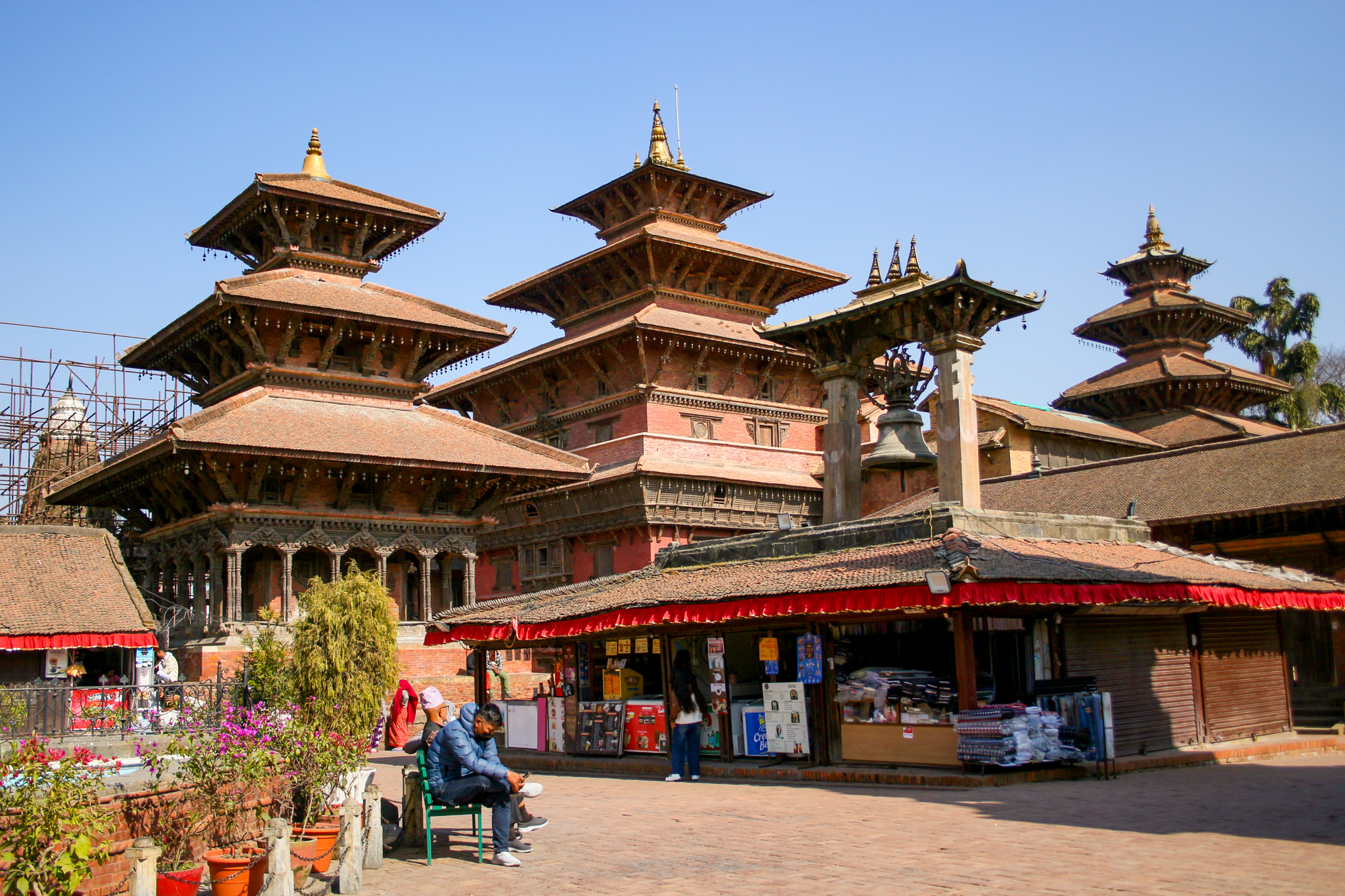
In the heart of Patan, amidst the Patan marketplace lays the Patan Durbar Square, an area filled with ancient palaces, pagoda temples, stone baths, Hindu and Buddhist statues, engravings and bronze cravings. The Palace of the Malla Kings is one of the highlights of Patan. Patan Durbar Square is also a UNESCO World Heritage Site. Also located in the square is the Patan Museum, formerly a Malla palace, which houses bronze statues and religious objects, some dating back to the 11th century.
Overnight at Traditional Homes Swotha, Patan
Day 3: Fly to Pokhara by fixed wing flight. Drive to Patichaur. Trek to Barhapokhari
Flight duration (Domestic Flight): 25 minutes approx.
Drive duration: approx. 2.5 hours
Trek duration: approx. 3 hours
Altitude: approx. 2700 m / 8860 ft
This morning, transfer to the airport to board the flight to Pokhara.
Pokhara, the rare combination of snow-clad peaks and snow fed lakes and rivers has helped to make this Valley one of the most picturesque natural attractions in the kingdom. Situated in the foothills of the magnificent Mt. Machhapucchre, Pokhara is an enchanting city soaked in tranquility. It is the starting point for many of Nepal’s most popular trekking and rafting destinations. The serenity of the Phewa Lake, accompanied by the grandeur of Machhapucchre, creates an ambiance of peace and magic. Pokhara boasts dense forests, gushing rivers, lucid lakes and world-famous view of the Himalayas.
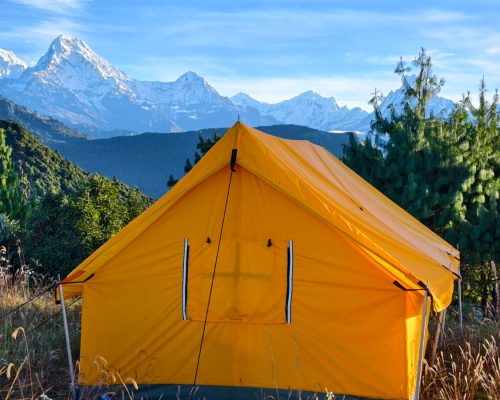
Upon arrival in Pokhara, drive approx. 2 hours to reach Patichaur (in Parbat) – the trek start point. Upon reaching Patichaur, the trek will start, and the walk is uphill reaching Barhapokhari, your beautiful camping spot for the night. Situated at an altitude of around 1800m, this place is often best spot for camping.
Overnight at Camp
Day 4: Trek to Haljure
Altitude: approx. 2400 m / 7,875 ft
Trek duration: approx. 3-4 hours (depending upon the route and walking pace)
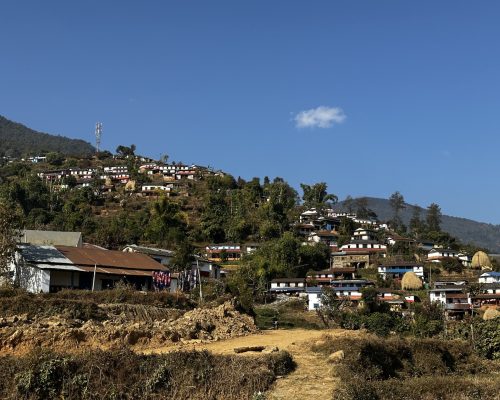
After breakfast, trek to Haljure. The walk mostly passes through the jungle, with steps in between here and there. As this is an untouched route, the routes are through the off beaten trails during this hike. The housing settlement can be found reaching Haljure.
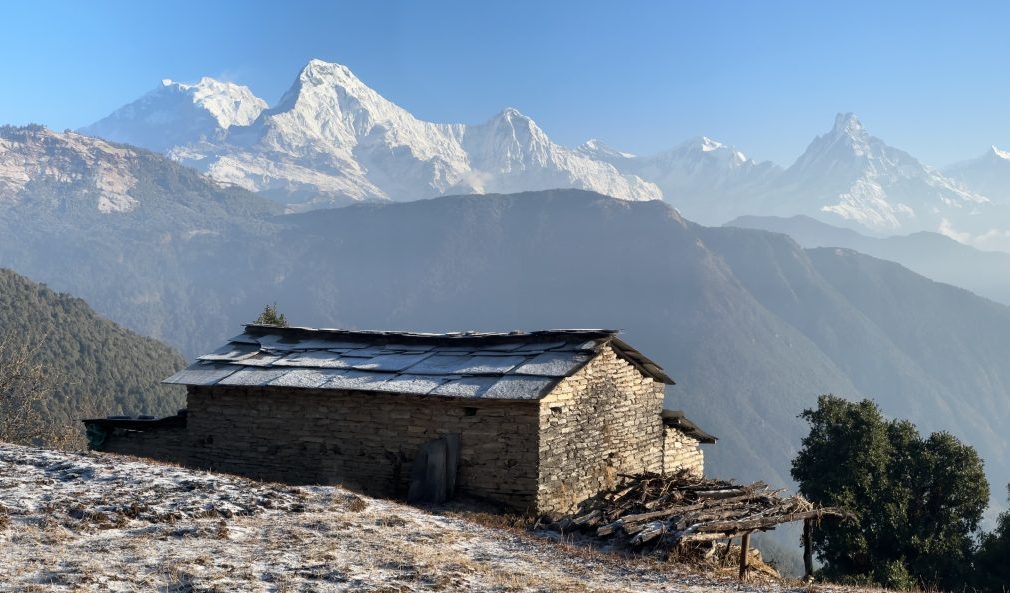
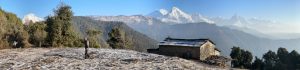
Haljure, a village found in Kyang, part of the Modi Rural Municipality. It sits just behind a hill shaped like the letter ‘m’, which you can spot from Kushma’s tallest suspension bridge in the north. Haljure offers stunning views of the Annapurna and Dhaulagiri Mountain ranges on clear days. You can also see many tall hills of Parbat like Bhamarkot, Hampal, Panchase, Dahare, and Chisapani, as well as plenty of hills from Baglung and Myagdi. It’s a lovely spot to take in nature’s beauty and enjoy the peaceful surroundings.
Overnight at Namo Lodge, Haljure ( Opening in 2027) *Currently possible with Camping
Day 5: Day hike to Lespar
Trek duration: approx. 4 hours
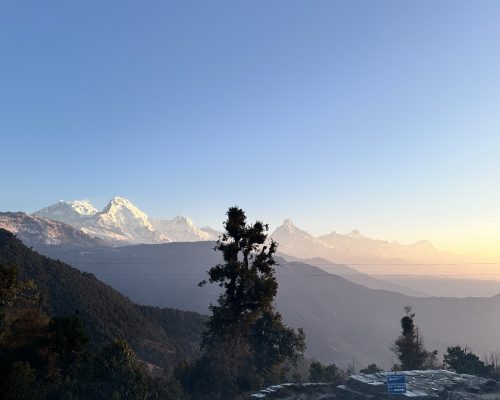
This morning, get up early to enjoy the sunrise and the Himalayan mountains from Haljure.
Start your day with a hearty breakfast prepared by our trek crew.
After breakfast, commence on day hike to the quaint and cultural village of Lespar – the settlement of Magars. It is a beautiful settlement located in the foothills of Kalangar mountain, far north of Mount Lespar.
For the first hour, the trail follows an open road where guests may encounter occasional vehicles, before entering a jungle path. The hike downhill through the jungle takes approximately two hours to reach Lespar.
Enjoy your lunch at the village.
While returning, the hike will be uphill following the same trail to return to Haljure.
Overnight at Namo Lodge, Haljure ( Opening in 2027) *Currently possible with Camping
Day 6: Trek Haljure to Banau. Drive to Pokhara
Trek duration: approx. 2 hours
Drive duration: approx. 3 hours
This morning, trek from Haljure to Banau. The hike till Banau will be downhill. The trail is an open trail facing the Himalayas (weather permitting). Upon arrival at Banau, drive to Pokhara.
Upon arrival in Pokhara, visit the International Mountain Museum: the museum is to the south of the airstrip near the Himalaya eye hospital. There are many interesting things like the original gear from many of the first Himalayan ascent. It provides information on mountaineering, the world’s mountain system.
Enjoy one hour boating at the Phewa Taal, the second largest lake in Nepal. The lake is stream fed but a dam regulates the water reserve, therefore, it is classified as semi-natural freshwater lake. Visit Barahi Temple – the island temple situated in a small island in the Phewa Lake surrounded by marvelous views.
Transfer to the hotel and check-in.
The rest of the day is free for relaxation.
Overnight at the hotel, Pokhara
Day 7: Drive to Chitwan
Distance: 153 km / 95 miles
Drive duration: 4 – 5 hours approx. (Subject to road and traffic conditions at the given period)
After breakfast, drive to Chitwan. Upon arrival in Bharatpur, transfer to the resort.
Chitwan is among the last surviving examples of continuous band of forests and grasslands, which once extended from the Indus River in Pakistan to the Burmese border. Chitwan National Park lies in the lush valley of Chitwan situated in the foothills of Churia ranges. It is the first National Park of the Kingdom and is one of the finest national parks in Asia. The Park is famous for its variety of wildlife especially the Great Indian one Horned Rhinoceros.
On arrival at the resort, a welcome drink will be served at the hotel. After check–in, you will be briefed about the resort’s accommodation and the types of flora and fauna that can be found here.
Later afternoon, enjoy canoeing down the river. As you float down the serenity of the tranquil water, you can observe the aquatic animals and the bird life that are so diverse in Chitwan. This excursion will last about one to two hours.
Enjoy a sundowner at the bank of Rapti River. Some light snacks with soft drinks will be served. Take a seat back and relax while watching the beautiful sun set behind the lush greenery of the Chitwan National Park.
Overnight at the hotel, Chitwan
Day 8: In Chitwan
After breakfast, go for an adventurous Jeep Safari inside the dense Chitwan National Park. This exciting ride will offer you a unique opportunity to experience the wildlife in Chitwan.
Make sure you wear clothes that match the environment like the colors of green, brown, khaki so you have more chances of animal-sighting; bright colored clothing may scare or alert the animals.
After lunch, you can enjoy an adventurous Jungle Walk inside the dense forest where you will get to witness some wild animals, birds, and game reserves. On your way back, take a tour of the nearby village and surroundings; interact with locals as our guide briefs you about the area and its people.
Return to the lodge and freshen up.
Overnight at the hotel, Chitwan
Day 9: Fly to Kathmandu
Flight details: TBA
Flight duration: approx. 20 mins
After breakfast, transfer to Bharatpur airport in time to board the flight to Kathmandu.
Upon arrival in Kathmandu, transfer to the hotel and check-in. Afternoon is free at leisure.
Overnight at Traditional Homes Swotha, Patan
Day 10: Final Departure
Breakfast at the hotel.
Timely transfer to the airport for your onward flight back home.